
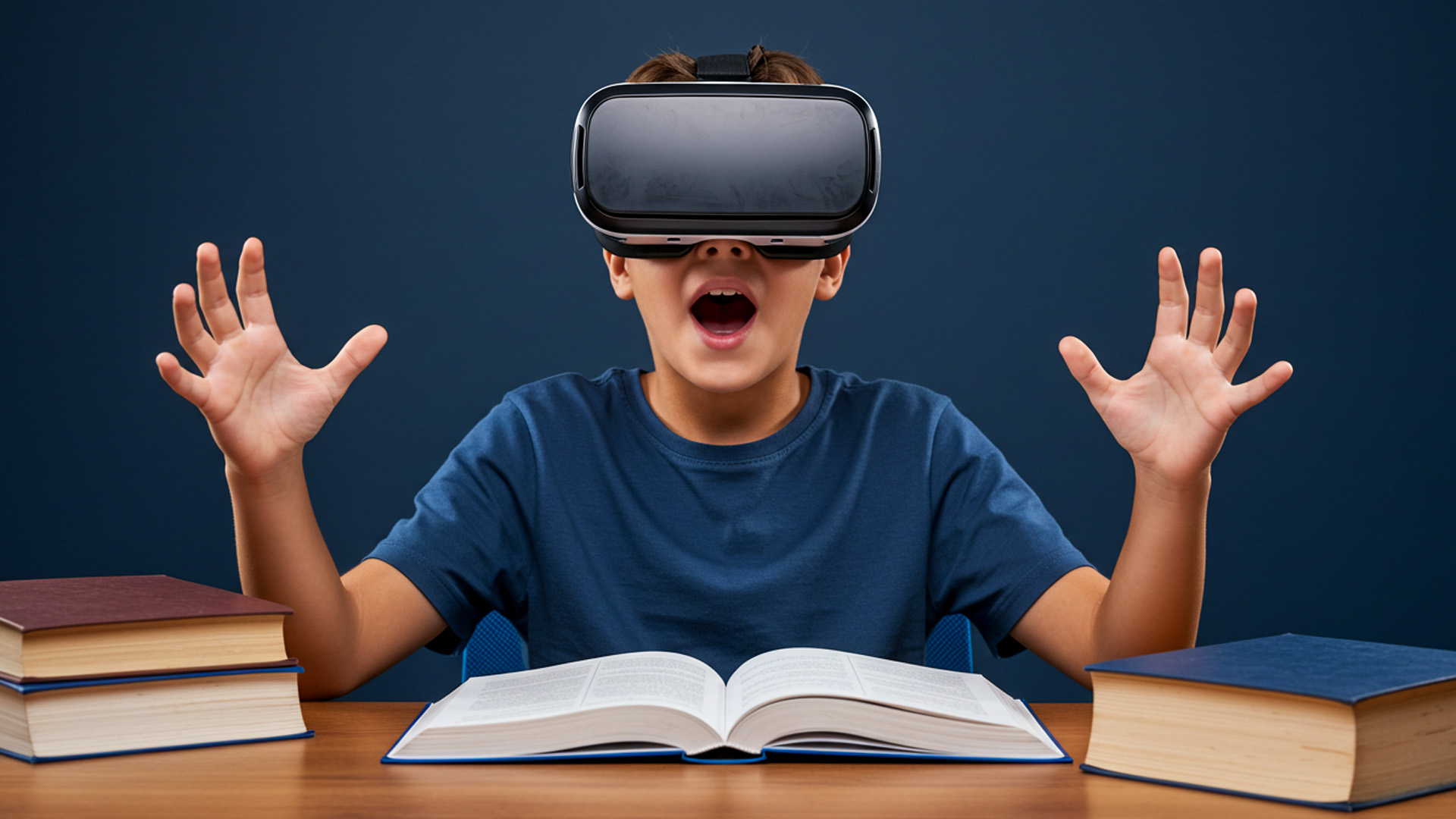
Immersive Lessons Beyond the Classroom Walls
Imagine stepping into a classroom where textbooks dissolve into living, breathing experiences. Instead of reading about the circulatory system, you walk through pulsating arteries; instead of memorizing equations, you manipulate particles floating in space. This is not the script of a science fiction film, but the unfolding reality of education and training powered by virtual reality (VR). As headsets shrink in price and content ecosystems expand, VR has become a vessel carrying knowledge across schools, hospitals, factories, and even hazardous terrains. Yet, like any pioneering tool, its trajectory is filled with promises, perils, and paradoxes—especially when viewed through the lens of developing regions where infrastructure and affordability remain formidable barriers.
Reimagining Classrooms with Virtual Worlds
Learning by Doing, Not Just Listening
Students often remember what they do more than what they hear. VR taps into this principle by replacing abstract lectures with interactive simulations. A history lesson, for example, can morph into a first-person stroll through the ruins of Pompeii, complete with echoes of daily life before the eruption of Vesuvius. Such immersive reenactments bypass rote memorization, embedding lessons in the student’s long-term memory through experience rather than repetition.
Unlike chalk-and-talk methods, VR fosters kinesthetic engagement. A biology teacher can guide students inside a three-dimensional model of DNA, letting them untwist strands with a flick of the hand. The result is a shift from passive note-taking to active exploration. In these moments, curiosity becomes the teacher’s strongest ally, and learning becomes less about compliance and more about discovery. This transformation illustrates why VR has been heralded as a catalyst for deeper cognitive anchoring.
Bridging Inequalities Through Shared Access
In many parts of the world, schools lack access to laboratories, field trips, or expensive equipment. A rural school in sub-Saharan Africa may struggle to afford microscopes or chemistry kits, yet VR can democratize access by delivering virtual labs at a fraction of the cost. Students wearing inexpensive headsets can perform experiments, manipulate molecules, or visit ecosystems that would otherwise remain out of reach. This democratization of learning tools could reduce educational inequalities if infrastructure keeps pace.
Yet access is not merely about equipment; it’s about leveling the cognitive playing field. A learner in a resource-poor context can, through VR, experience the same sophisticated anatomy lessons available in top-tier schools. This synchronization of opportunity helps bridge the gap between privileged and underprivileged learners. It simultaneously raises questions: Who designs the content, whose cultural lens dominates the curriculum, and how can localized knowledge find expression in these globalized platforms?
The Teacher as a Digital Navigator
Even the most sophisticated VR headset cannot replace the human touch of a skilled teacher. Instead, educators become navigators of these digital landscapes. They curate experiences, contextualize simulations, and help students transfer virtual insights into real-world applications. Without this scaffolding, VR risks becoming a flashy distraction rather than a meaningful pedagogy. The teacher remains the compass, ensuring learners don’t get lost in spectacle but instead find direction in substance.
To assume VR can automate education is to miss its purpose. A headset can transport a child to the moon, but it takes a teacher’s guidance to transform that trip into lessons about physics, history, and human ambition. Training educators to wield VR effectively—blending it with traditional methods rather than replacing them—becomes crucial. Only then can immersive tools enhance rather than erode the relational essence of learning.

Vocational Training in the Age of Simulation
From Workshop to Virtual Workshop
Vocational training often demands repetitive practice on equipment that is costly, scarce, or dangerous. VR transforms this equation by allowing apprentices to operate virtual machinery with zero risk. A welding student can perfect their technique in a simulated workshop where sparks fly realistically, mistakes cost nothing, and the feedback is instantaneous. Such practice grounds confidence before learners face real metal and fire.
This virtual rehearsal also lowers costs for institutions. Instead of maintaining large inventories of consumables—wood, steel, fuel—educators can offload early-stage training into digital environments. By the time students move into physical workshops, they have already internalized the basics, reducing waste and equipment wear. In resource-constrained economies, this hybrid model of VR plus limited physical practice is an economical compromise with transformative potential.
Hazards Without the Hazard
Electricians, miners, and mechanics often face hazardous scenarios that are difficult to replicate safely. VR provides a sandbox where danger can be simulated without consequences. An apprentice electrician can troubleshoot live circuits in VR, experiencing shocks, sparks, and system failures in a safe but realistic environment. These experiences cultivate muscle memory for handling crises, ensuring that the first real-world emergency isn’t also their first exposure.
By replicating high-risk situations, VR allows learners to build resilience and critical thinking under pressure. In aviation, for example, trainees practice emergency landings countless times in simulators before ever touching a cockpit. The same principle now extends to industries from oil rigs to firefighting brigades. The virtual rehearsal ensures that when calamity strikes, the response is instinctual rather than experimental.
Scaling Skill Development for Millions
Vocational training often struggles to scale because it requires hands-on equipment and skilled mentors. VR offers scalability by packaging entire workshops into software that can be deployed across schools, training centers, and even individual homes. A single VR module can train thousands without geographic constraints, making it a multiplier for workforce development in fast-growing economies.
Scaling is not just about numbers; it is about consistency. A VR module ensures every trainee encounters the same standards and benchmarks, reducing disparities in instruction quality. Where one workshop may lack an experienced trainer, the software ensures the fidelity of instruction. In developing nations where skilled trainers are scarce, VR thus becomes both mentor and laboratory, filling critical gaps in human capital pipelines.

Medical Education Through Virtual Anatomy
Dissecting Without Scalpels
For centuries, medical students relied on cadavers to learn anatomy. Yet cadavers are expensive, scarce, and ethically complex. VR reshapes this landscape by offering interactive, high-fidelity models of the human body. A student can peel back skin, rotate organs, and even watch animated blood flow—all with a level of precision impossible in traditional labs. Dissection becomes not a one-time event but a repeatable, on-demand process.
Unlike cadavers, virtual bodies do not degrade. They can be scaled to any magnification, paused mid-process, and rewound for revision. This ability to revisit complex systems repeatedly sharpens comprehension and reduces errors. Medical schools adopting VR report students showing faster understanding of anatomical relationships, freeing classroom time for clinical discussions rather than rote memorization of structures.
Practicing Rare and Critical Procedures
Some medical procedures are so rare that students may never witness them during training. VR fills this void by simulating rare but critical scenarios—an infant resuscitation, a complex neurosurgery, or a cardiac arrest in the ER. By rehearsing these scenarios, students can develop instincts that may one day save lives in real emergencies. VR thus becomes not just a teaching tool but a rehearsal stage for life-or-death decisions.
Consider the analogy of a pilot: one would not trust a pilot who has never practiced emergency landings. Likewise, a physician should not face their first complex emergency unprepared. VR ensures that medical professionals rehearse dozens of critical situations before encountering them in reality. It transforms medicine from a discipline of chance exposure to one of deliberate, structured preparation.
Empathy Through Embodiment
Medical education is not only about technical skills; it is also about empathy. VR allows students to embody patients, experiencing conditions like dementia, color blindness, or chronic pain from a first-person perspective. Such immersive empathy-building reshapes bedside manners, reminding future doctors that medicine is not only about fixing bodies but also about understanding lives.
When students virtually inhabit the body of a patient struggling with impaired mobility, they gain visceral insight into daily frustrations. This embodied empathy translates into more compassionate care. In this sense, VR extends beyond anatomy and procedures, serving as a moral compass in shaping not just competent physicians but humane ones.

Challenges on the Road to Immersive Learning
The Price of Immersion
Despite falling costs, VR headsets and compatible hardware remain financially prohibitive for many schools. Beyond hardware, developing or licensing quality content adds recurring expenses. For institutions already struggling with basic resources—desks, books, electricity—the promise of VR can feel like a mirage shimmering just out of reach. Budgetary constraints thus form the first wall VR must scale in its educational journey.
In wealthier contexts, costs are offset by savings in equipment, travel, or consumables. But in developing countries, where every dollar competes with urgent needs like feeding programs or teacher salaries, VR investments can appear indulgent. Unless supported by governments, NGOs, or public-private partnerships, the adoption of VR risks reinforcing inequalities rather than resolving them.
Infrastructure and Connectivity Barriers
VR thrives on reliable electricity, robust internet, and adequate physical space. In many schools across the Global South, these prerequisites are scarce. Frequent power outages, limited broadband, and overcrowded classrooms can render VR impractical. Without infrastructural readiness, even donated headsets may gather dust in locked cabinets, becoming artifacts of ambition rather than tools of transformation.
Infrastructure challenges are not insurmountable but require systemic solutions. Solar-powered labs, offline VR content, and lightweight standalone headsets offer partial workarounds. Yet, without broader investment in digital ecosystems, VR may remain a luxury in contexts where chalk and blackboards still dominate. The irony is stark: the same technology that democratizes knowledge may remain inaccessible to those who need it most.
Teacher Training and Cultural Resistance
Introducing VR into education is not merely about distributing hardware; it demands a cultural shift in pedagogy. Many teachers, already burdened with curricula and assessments, view VR as an additional complexity. Without adequate training, they may underutilize the technology or, worse, abandon it altogether. Teacher buy-in is the fulcrum upon which VR’s success balances.
Beyond skills, cultural resistance looms. Some communities see VR as frivolous entertainment rather than legitimate pedagogy. Convincing stakeholders—parents, administrators, governments—requires evidence of impact and clear alignment with educational goals. Pilot projects that showcase measurable improvements in learning outcomes can gradually overcome skepticism. Until then, VR risks being dismissed as a gimmick in places where traditional chalkboards still carry unquestioned authority.
